In this tutorial, we explore how we use Daft as a high-performance, Python-native data engine to build an end-to-end analytical pipeline. We start by loading a real-world MNIST dataset, then progressively transform it using UDFs, feature engineering, aggregations, joins, and lazy execution. Also, we demonstrate how to seamlessly combine structured data processing, numerical computation, and…
Frontier multimodal models usually process an image in a single pass. If they miss a serial number on a chip or a small symbol on a building plan, they often guess. Google’s new Agentic Vision capability in Gemini 3 Flash changes this by turning image understanding into an active, tool using loop grounded in visual…
import subprocess, sys, os, json, hashlib
def pip(cmd):
subprocess.check_call([sys.executable, "-m", "pip"] + cmd)
pip(["uninstall", "-y", "pillow", "PIL", "torchaudio", "colpali-engine"])
pip(["install", "-q", "--upgrade", "pip"])
pip(["install", "-q", "pillow<12", "torchaudio==2.8.0"])
pip(["install", "-q", "colpali-engine", "pypdfium2", "matplotlib", "tqdm", "requests"])
Source link
Waymo is introducing the Waymo World Model, a frontier generative model that drives its next generation of autonomous driving simulation. The system is built on top of Genie 3, Google DeepMind’s general-purpose world model, and adapts it to produce photorealistic, controllable, multi-sensor driving scenes at scale.
Waymo already reports nearly 200 million fully autonomous miles…
How do you combine SigLIP2, DINOv3, and SAM3 into a single vision backbone without sacrificing dense or segmentation performance? NVIDIA’s C-RADIOv4 is a new agglomerative vision backbone that distills three strong teacher models, SigLIP2-g-384, DINOv3-7B, and SAM3, into a single student encoder. It extends the AM-RADIO and RADIOv2.5 line, keeping similar computational cost while improving…
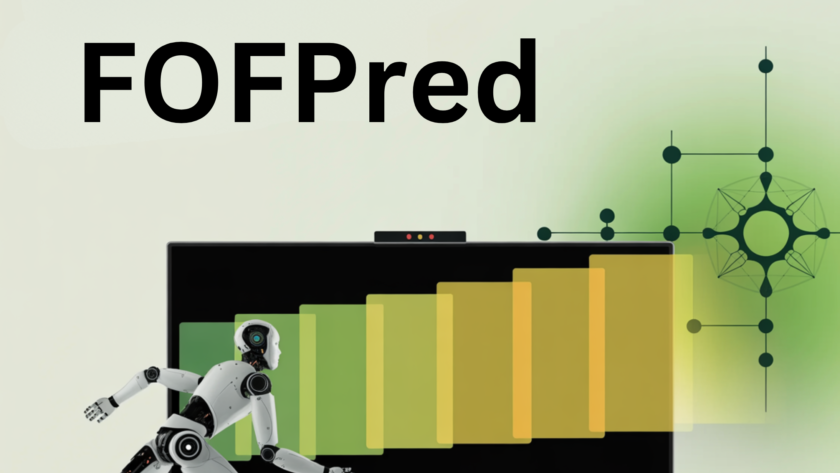
Salesforce AI research team present FOFPred, a language driven future optical flow prediction framework that connects large vision language models with diffusion transformers for dense motion forecasting in control and video generation settings. FOFPred takes one or more images and a natural language instruction such as ‘moving the bottle from right to left’ and predicts…
Black Forest Labs releases FLUX.2 [klein], a compact image model family that targets interactive visual intelligence on consumer hardware. FLUX.2 [klein] extends the FLUX.2 line with sub second generation and editing, a unified architecture for text to image and image to image, and deployment options that range from local GPUs to cloud APIs, while keeping…
Thinking Machines Lab has moved its Tinker training API into general availability and added 3 major capabilities, support for the Kimi K2 Thinking reasoning model, OpenAI compatible sampling, and image input through Qwen3-VL vision language models. For AI engineers, this turns Tinker into a practical way to fine tune frontier models without building distributed training…
Zhipu AI has open sourced the GLM-4.6V series as a pair of vision language models that treat images, video and tools as first class inputs for agents, not as afterthoughts bolted on top of text.
Model lineup and context length
The series has 2 models. GLM-4.6V is a 106B parameter foundation model for cloud and…
TLDR: VISTA is a multi agent framework that improves text to video generation during inference, it plans structured prompts as scenes, runs a pairwise tournament to select the best candidate, uses specialized judges across visual, audio, and context, then rewrites the prompt with a Deep Thinking Prompting Agent, the method shows consistent gains over strong…