Nvidia made major waves at SIGGRAPH 2025 by unveiling a suite of new Cosmos world models, robust simulation libraries, and cutting-edge infrastructure—all designed to accelerate the next era of physical AI for robotics, autonomous vehicles, and industrial applications. Let’s break down the technological details, what this means for developers, and why it matters to the…
Robotic grasping is a cornerstone task for automation and manipulation, critical in domains spanning from industrial picking to service and humanoid robotics. Despite decades of research, achieving robust, general-purpose 6-degree-of-freedom (6-DOF) grasping remains a challenging open problem. Recently, NVIDIA unveiled GraspGen, a novel diffusion-based grasp generation framework that promises to bring state-of-the-art (SOTA) performance with unprecedented…
Estimated reading time: 5 minutes
Introduction
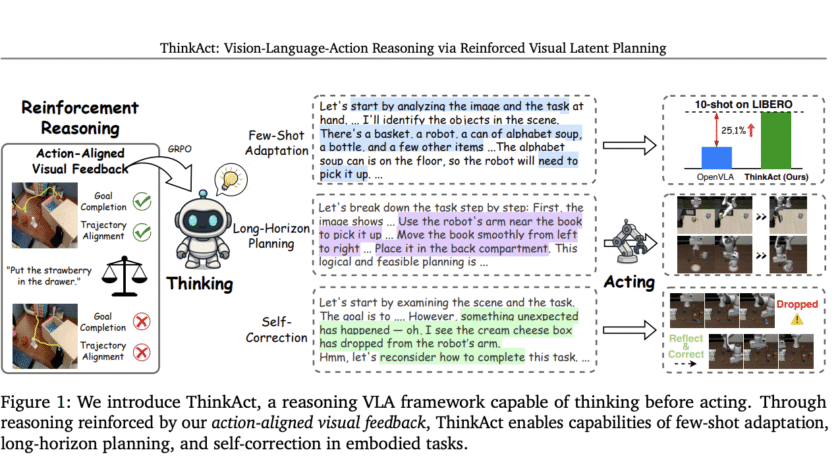
Embodied AI agents are increasingly being called upon to interpret complex, multimodal instructions and act robustly in dynamic environments. ThinkAct, presented by researchers from Nvidia and National Taiwan University, offers a breakthrough for vision-language-action (VLA) reasoning, introducing reinforced visual latent planning to…
Micromobility solutions—such as delivery robots, mobility scooters, and electric wheelchairs—are rapidly transforming short-distance urban travel. Despite their growing popularity as flexible, eco-friendly transport alternatives, most micromobility devices still rely heavily on human control. This dependence limits operational efficiency and raises safety concerns, especially in complex, crowded city environments filled with dynamic obstacles like pedestrians and…
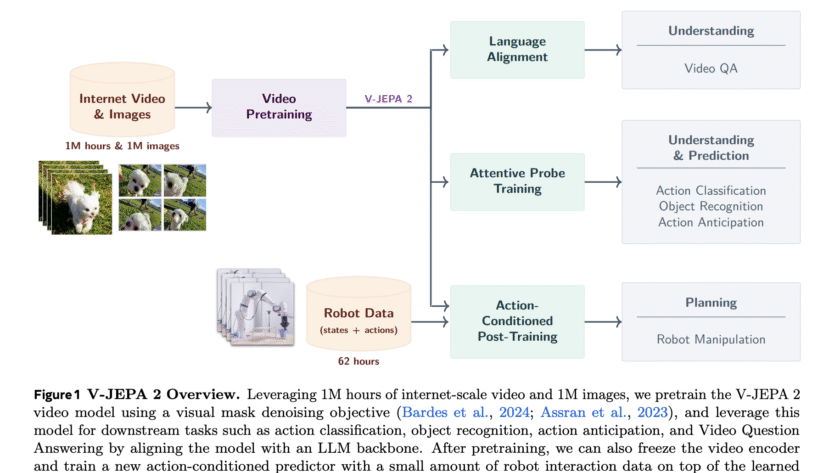
Meta AI has introduced V-JEPA 2, a scalable open-source world model designed to learn from video at internet scale and enable robust visual understanding, future state prediction, and zero-shot planning. Building upon the joint-embedding predictive architecture (JEPA), V-JEPA 2 demonstrates how self-supervised learning from passive internet video, combined with minimal robot interaction data, can yield…
The Challenge of Scaling 3D Environments in Embodied AI
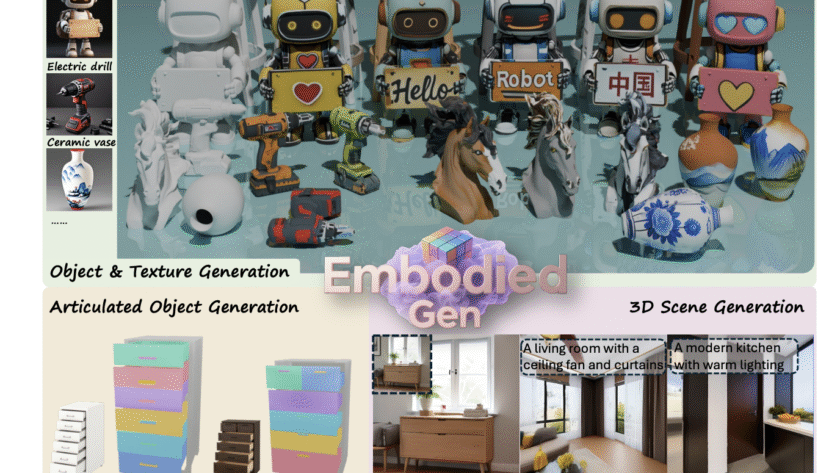
Creating realistic and accurately scaled 3D environments is essential for training and evaluating embodied AI. However, current methods still rely on manually designed 3D graphics, which are costly and lack realism, thereby limiting scalability and generalization. Unlike internet-scale data used in models like GPT and CLIP,…
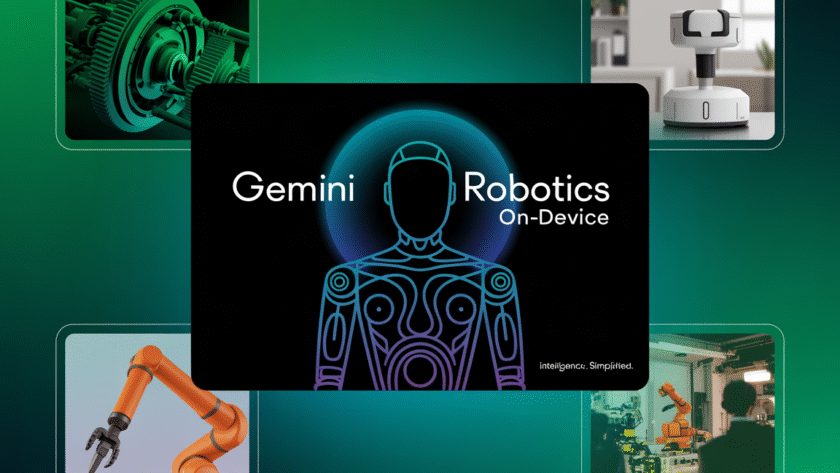
Google DeepMind has unveiled Gemini Robotics On-Device, a compact, local version of its powerful vision-language-action (VLA) model, bringing advanced robotic intelligence directly onto devices. This marks a key step forward in the field of embodied AI by eliminating the need for continuous cloud connectivity while maintaining the flexibility, generality, and high precision associated with the…
Challenges in Dexterous Hand Manipulation Data Collection
Creating large-scale data for dexterous hand manipulation remains a major challenge in robotics. Although hands offer greater flexibility and richer manipulation potential than simpler tools, such as grippers, their complexity makes them difficult to control effectively. Many in the field have questioned whether dexterous hands are worth the…
Robots are usually unsuitable for altering different tasks and environments. General-purpose models of robots are devised to circumvent this problem. They allow fine-tuning these general-purpose models for a wide scope of robotic tasks. However, it is challenging to maintain the consistency of shared open resources across various platforms. Success in real-world environments is far from…
In the rapidly evolving field of household robotics, a significant challenge has emerged in executing personalized organizational tasks, such as arranging groceries in a refrigerator. These tasks require robots to balance user preferences with physical constraints while avoiding collisions and maintaining stability. While Large Language Models (LLMs) enable natural language communication of user preferences, this…