# Introduction
Agentic coding sessions are expensive. A single Claude Code session — reading files, writing code, running tests, iterating — can burn 10–50x more tokens than a plain chat conversation. At scale, that adds up fast. Add rate limits that can interrupt a long-running workflow mid-session, and the dependency on a…
Zyphra has released Zamba2-VL, a family of open vision-language models. The release covers three sizes: 1.2B, 2.7B, and 7B parameters. Each model is built on the Zamba2 hybrid SSM–Transformer backbone.
Vision-language models (VLMs) read images and text together. They answer questions about charts, documents, and photos. Most open VLMs use a dense Transformer as…
Why diffusion for text? While the AI research community has explored diffusion-based text generation for years, applying it to large models has remained a challenge. DiffusionGemma changes this by shifting how models use hardware. The trade-off with traditional models Most language models act like a typewriter, generating one token at a time from left to…
# Introduction
A quick search on Hugging Face returns over 90,000 text-to-image models alone. That number is useful context, not a shopping list. Most people who want a free AI image generator end up on Midjourney or DALL-E without realizing that Hugging Face hosts the actual models powering those tools — the same…
In this tutorial, we work through an end-to-end workflow for Qualcomm AI Hub Models. We start by setting up the required package, discovering the available model collection, and loading MobileNet-V2 for local PyTorch inference. We also handle an important input-shape issue by converting NHWC image tensors into the NCHW format expected by the model. From…
Twenty years ago, translation at Google began as one of our pioneering machine learning experiments to turn the science of language into the magic of human connection. That experiment has come a long way with over a trillion words being translated for billions of users across our products every month. Today, we’re taking our next…
# Introduction
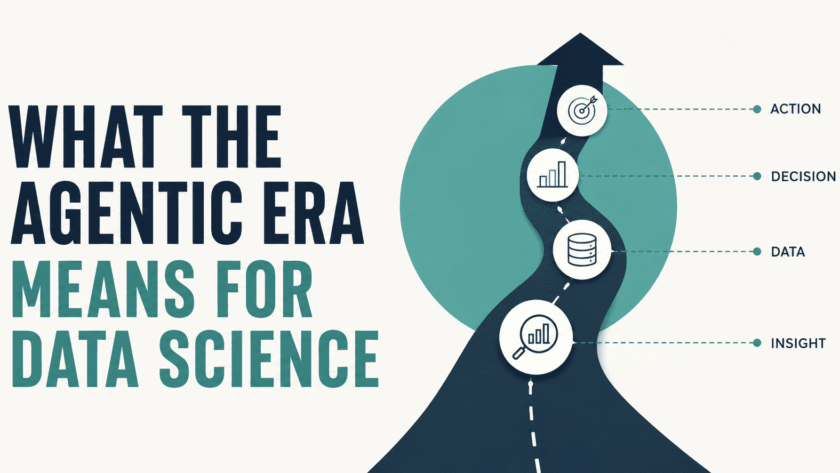
Something has shifted at the intersection of AI and data science, and it's changed how practitioners work. The systems deployed today don't just generate a response and stop. They plan. They execute multi-step tasks. They call external tools, evaluate their own outputs, and loop back when results fall short.
We're not…
Introducing Google Antigravity 2.0
Source link
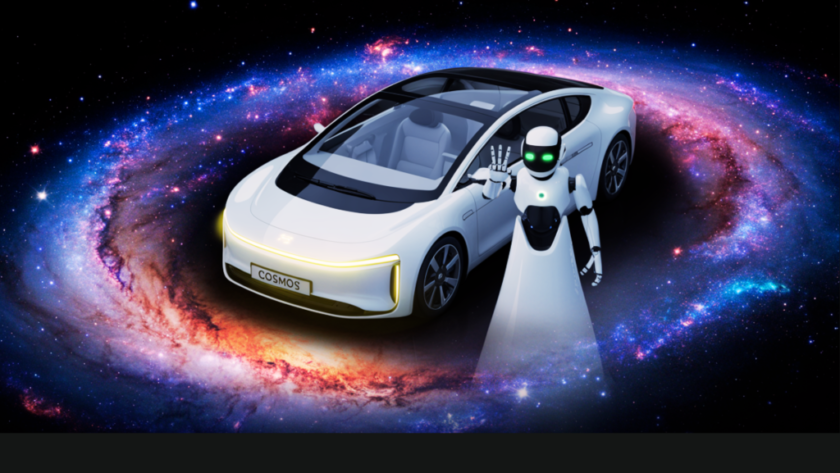
NVIDIA AI team have released Cosmos 3. It is a family of omnimodal world models for physical AI. The models combine physical reasoning, world generation, and action generation. All three capabilities live inside one open model. NVIDIA open sourced the checkpoints, training scripts, deployment tools, and datasets. The Cosmos 3 release targets robotics, autonomous vehicles,…
# Introduction
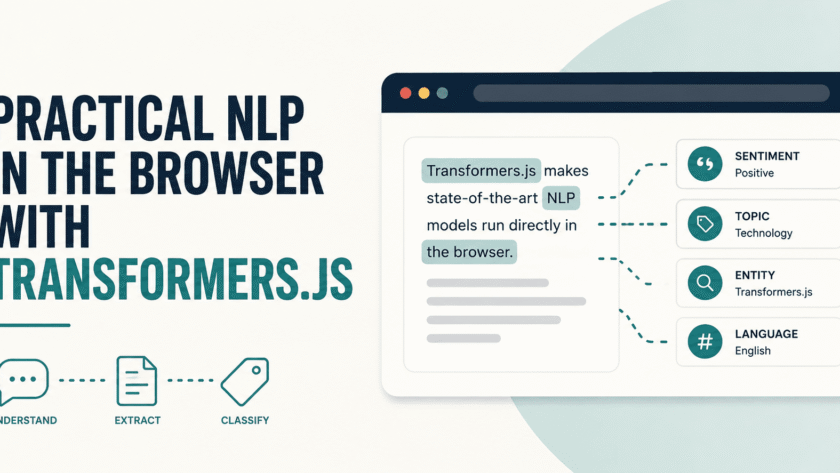
For a long time, running transformer models meant maintaining a Python server, paying for GPU time, and routing every inference request through an API. The user typed something, it left their machine, touched your infrastructure, and came back as a prediction. That architecture made sense when the models were too large…