|LLM|INTERPRETABILITY|SPARSE AUTOENCODERS|XAI| A deep dive into LLM visualization and interpretation using sparse autoencoders Image created by the author using DALL-EAll things are subject to interpretation whichever interpretation prevails at a given time is a function of power and not truth. — Friedrich Nietzsche As AI systems grow in scale, it is increasingly difficult and pressing…

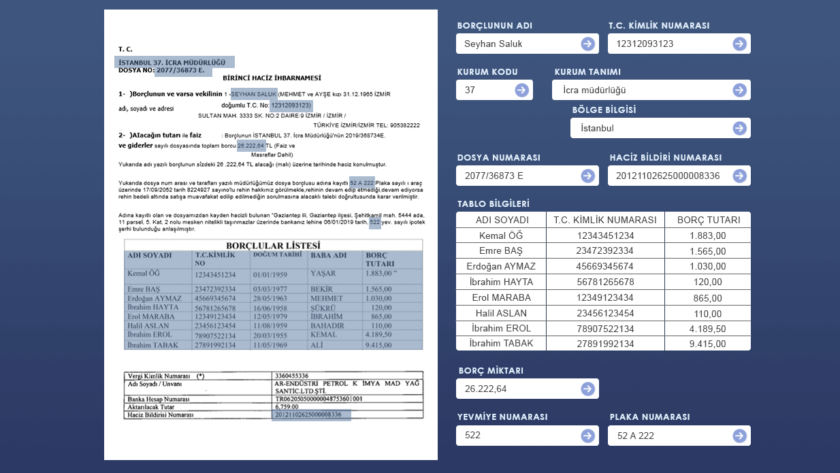
Introduction to Table extraction Extracting tables from documents may sound straightforward, but in reality, it is a complex pipeline involving parsing text, recognizing structure, and preserving the precise spatial relationships between cells. Tables carry a wealth of information compacted into a grid of rows and columns, where each cell holds context based on its neighboring…
Document Visual Question Answering (DocVQA) represents a rapidly advancing field aimed at improving AI’s ability to interpret, analyze, and respond to questions based on complex documents that integrate text, images, tables, and other visual elements. This capability is increasingly valuable in finance, healthcare, and law settings, as it can streamline and support decision-making processes that…
In recent years, there has been significant development in the field of large pre-trained models for learning robot policies. The term “policy representation” here refers to the different ways of interfacing with the decision-making mechanisms of robots, which can potentially facilitate generalization to new tasks and environments. Vision-language-action (VLA) models are pre-trained with large-scale robot…