Skip to content Skip to sidebar Skip to footer

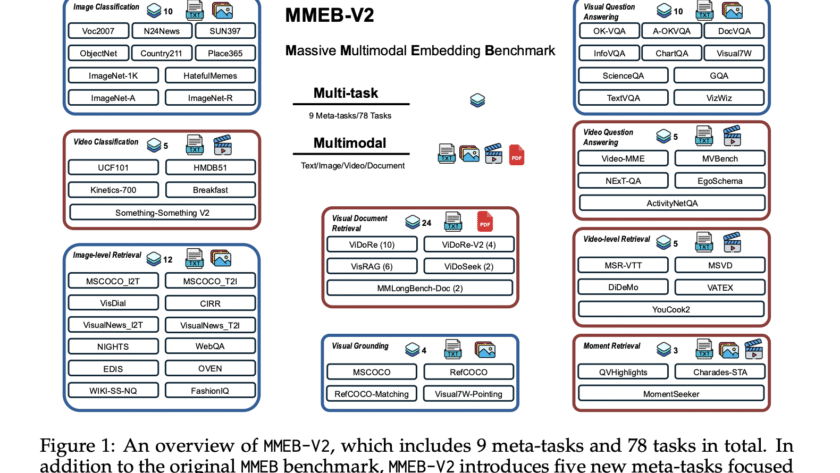
VLM2Vec-V2: A Unified Computer Vision Framework for Multimodal Embedding Learning Across Images, Videos, and Visual Documents

Embedding models act as bridges between different data modalities by encoding diverse multimodal information into a shared dense representation space. There have been advancements in embedding models in recent years, driven by progress in large foundation models. However, existing multimodal embedding models are trained on datasets such as MMEB and M-BEIR, with most focus only…

Read More

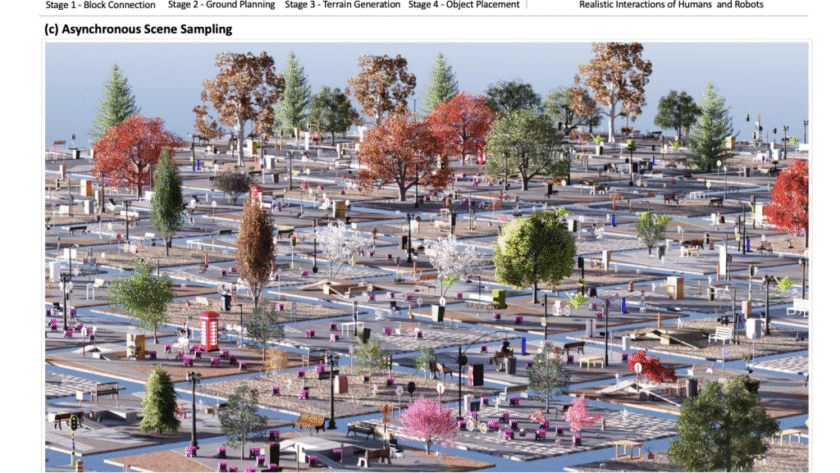
URBAN-SIM: Advancing Autonomous Micromobility with Scalable Urban Simulation

Micromobility solutions—such as delivery robots, mobility scooters, and electric wheelchairs—are rapidly transforming short-distance urban travel. Despite their growing popularity as flexible, eco-friendly transport alternatives, most micromobility devices still rely heavily on human control. This dependence limits operational efficiency and raises safety concerns, especially in complex, crowded city environments filled with dynamic obstacles like pedestrians and…

Read More

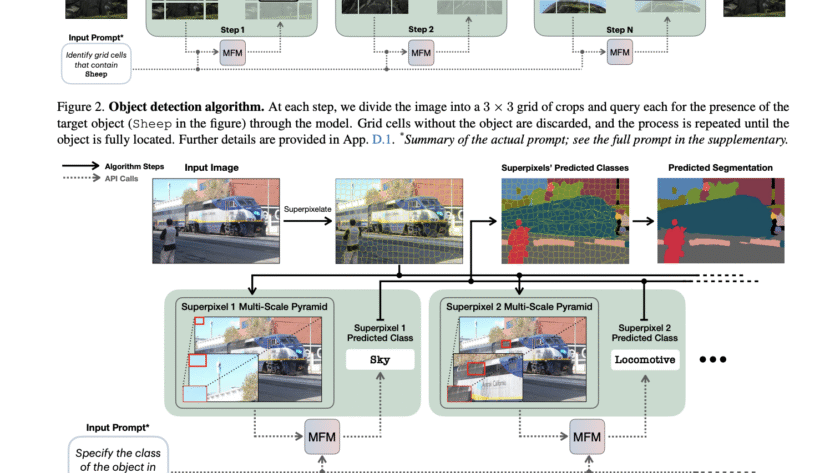
GPT-4o Understands Text, But Does It See Clearly? A Benchmarking Study of MFMs on Vision Tasks

Multimodal foundation models (MFMs) like GPT-4o, Gemini, and Claude have shown rapid progress recently, especially in public demos. While their language skills are well studied, their true ability to understand visual information remains unclear. Most benchmarks used today focus heavily on text-based tasks, such as VQA or classification, which often reflect language strengths more than…

Read More

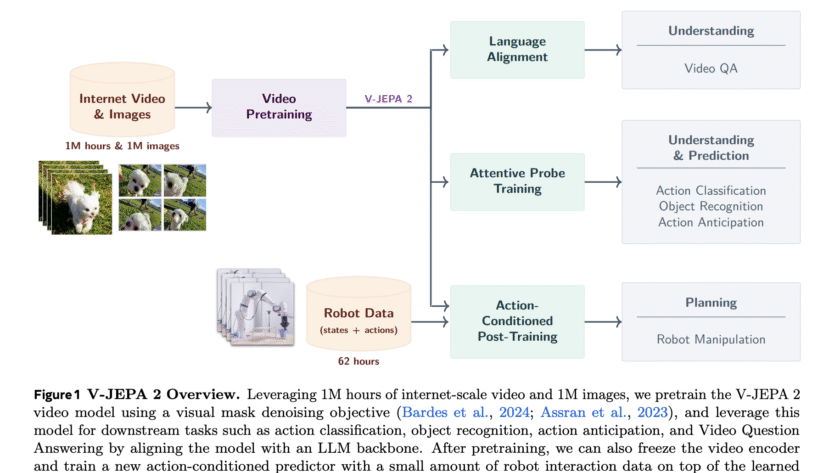
Meta AI Releases V-JEPA 2: Open-Source Self-Supervised World Models for Understanding, Prediction, and Planning

Meta AI has introduced V-JEPA 2, a scalable open-source world model designed to learn from video at internet scale and enable robust visual understanding, future state prediction, and zero-shot planning. Building upon the joint-embedding predictive architecture (JEPA), V-JEPA 2 demonstrates how self-supervised learning from passive internet video, combined with minimal robot interaction data, can yield…

Read More

How Autonomous Agents Are Quietly Reshaping Supply Chains Aiiot Talk

Supply chains are the lifeblood of global commerce, yet they remain plagued by inefficiencies—delays, stockouts, overproduction, and unpredictable disruptions. Enter autonomous AI agents, the silent orchestrators now optimizing logistics with superhuman precision. Unlike traditional software, these agents learn, adapt, and make decisions in real-time, often without human intervention. “AI agents don’t just follow rules—they rewrite them. In…

Read More